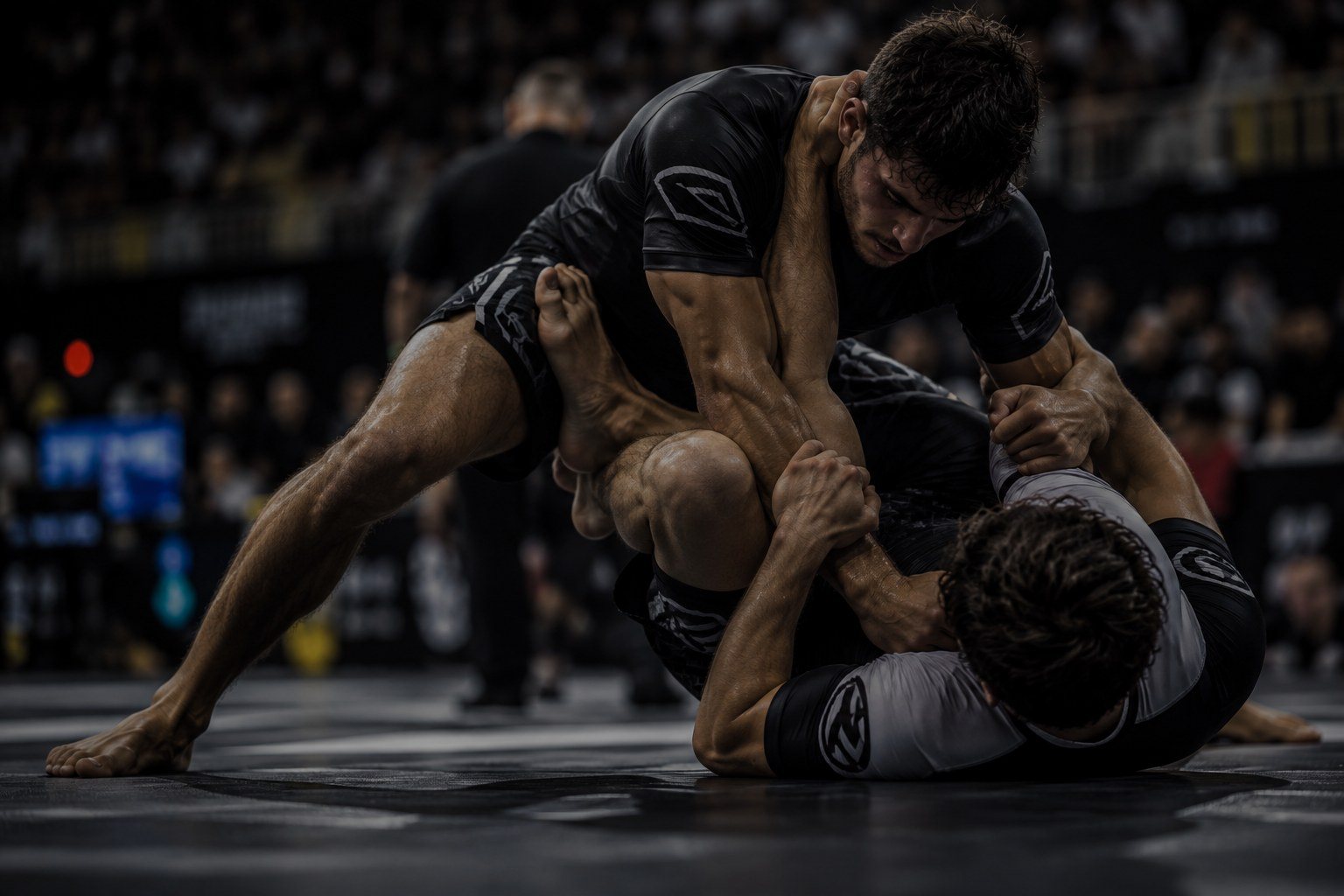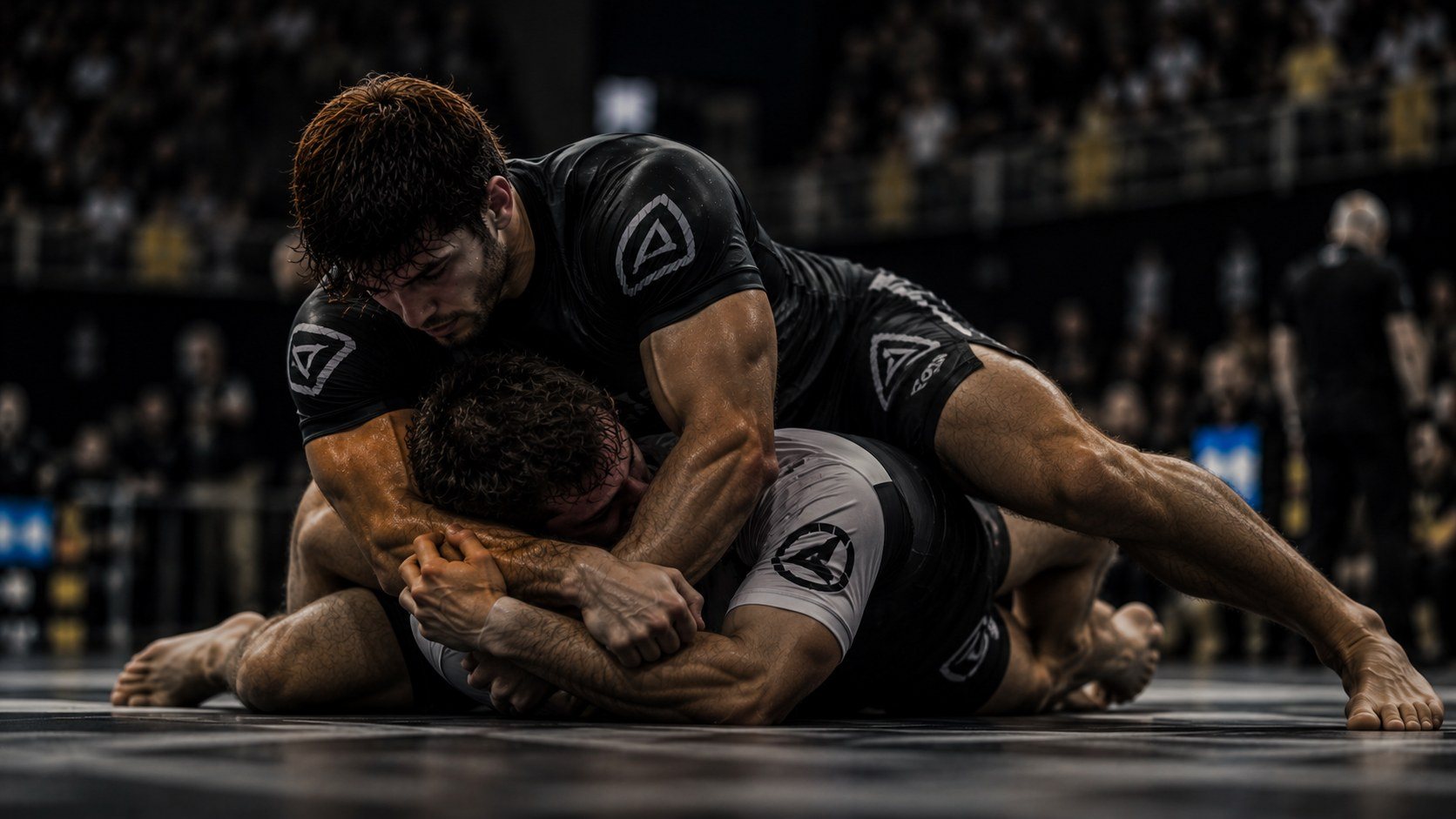
Does the Gi Improve Your No‑Gi Game?
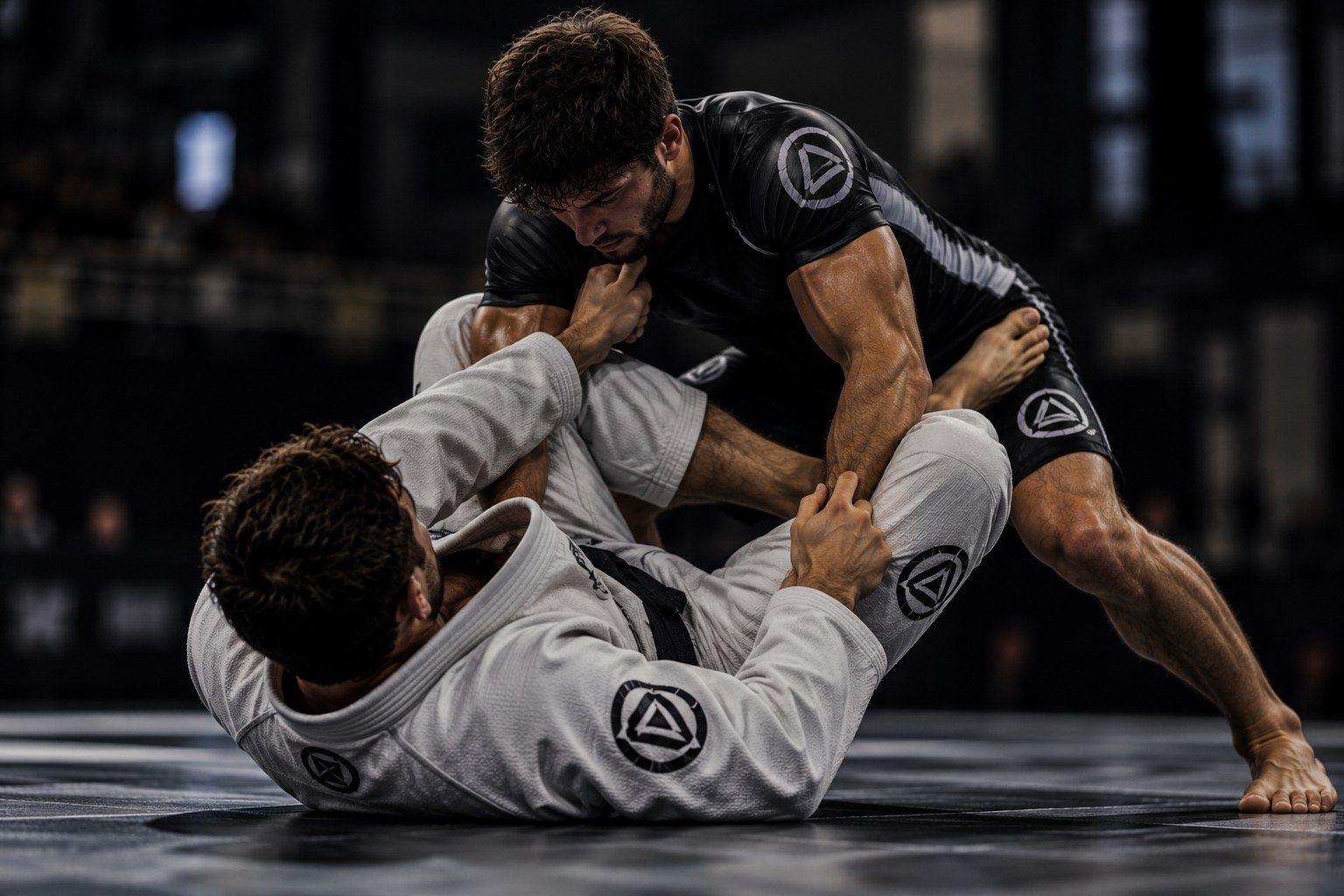
Yes—When the Learning Transfers
Yes, training in the gi can benefit your no-gi game. But putting on a gi does not automatically make you better without one.
The benefit comes from the problems you solve, the skills those problems develop, and your ability to adapt those skills when the clothing, grips, pace, and rules change.
That distinction matters. We hear broad claims all the time: the gi makes your defense better, no-gi makes your offense better, the gi makes you technical, no-gi makes you athletic. Those statements take complicated learning environments and reduce them to slogans.
Both formats require technique. Both reward athleticism. Both can develop intelligent, adaptable grapplers. Both can also produce habits that work beautifully in one environment and fall apart in the other.
As a coach, I care about what you can actually do against resistance. If your gi training helps you control, escape, sweep, pass, or submit someone without the gi, there is useful transfer. If that improvement disappears when the fabric disappears, you have developed something more specific to the gi.
Neither outcome makes the training worthless. It tells us what the training is preparing you to do.
Shared Problems, Different Solutions
Gi and no-gi share many of the same problems. You need to manage distance, protect inside space, disrupt balance, control posture, isolate limbs, and prevent your opponent from organizing an effective response.
The clothing changes the ways you can solve those problems. A collar grip gives you a connection that does not exist in no-gi. Pants grips let you control the legs differently. Lapels introduce entirely new attacks and defensive demands. Friction changes how easily bodies move against each other.
Those changes can alter the entire exchange. A collar grip is not simply a collar tie with fabric added. It has different reach, durability, leverage, and defensive responses. Recognizing a shared objective does not mean the execution transfers unchanged.
Consider butterfly guard. In either format, bottom may want to bring the opponent's weight over the hooks, compromise a supporting post, and create an angle for a sweep or back exposure. In the gi, a collar-and-belt connection might help organize that attack. In no-gi, the athlete might use an underhook, overhook, shoulder crunch, or two-on-one.
The balance problem remains recognizable. The information guiding the attack changes. How far can the opponent retreat? Can they free their arm? Can they stand and disengage? How long will the connection survive?
That is where transfer lives: in recognizing useful opportunities and adapting your actions to the connections available.
Butterfly and X-Guard: Transfer the Objective, Then Rebuild the Connection
Imagine you establish butterfly guard with a collar grip and control of a sleeve. You pull the opponent forward, draw weight onto your hooks, and prevent one hand from posting as you elevate toward that side. You are coordinating upper-body control with lower-body elevation.
Now remove the gi. Reaching for the same location does not reproduce the same control. You may need to sit closer, establish an underhook, control the far arm, and create an angle before the opponent withdraws. If they stand rather than kneel into your hooks, the opportunity may shift toward entering underneath a leg or coming up to wrestle.
X-guard presents a similar lesson. Getting your hips underneath an opponent, controlling a leg, and stretching their base can create opportunities in either format. But a pants grip may let you retain access to the leg from a distance that a hand around the ankle will not reliably preserve. Without that fabric, leg position, attachment, and the timing of your entry take on greater importance.
The goal is to become sensitive to their balance and available posts. If their weight moves away from your sweeping direction, can you change direction? If they free the leg, can you reconnect or come up? The skill includes recognizing when the original attack has stopped being available.
Balance, Base, and Recovering Your Position
In the gi, an opponent can pull you forward through the collar while controlling a sleeve and blocking a leg. Staying upright requires more than being strong. You must organize your feet, hips, posture, and available posts around the direction of the threat.
Without the gi, you may face a two-on-one, an arm drag, or a butterfly elevation. The exact attack changes, but your ability to recognize compromised balance and reorganize your base can still be useful.
However, there is an important limit. If your only response to losing balance is grabbing the opponent's pants, that solution will disappear in no-gi. You need another way to post, recover position, or counterattack.
The useful question after a successful defense is: what kept me balanced? Was it my positioning, my timing, a clothing grip, or some combination? Answering honestly tells you what still needs work.
Guard Retention: Protecting Space and Recovering Connections
Pants grips can stop you from freely retracting your legs. A passer can pin a leg, redirect your knees, and hold your lower body while moving around it. This can expose weaknesses in your ability to recover inside position and reconnect your upper and lower body.
Suppose a passer redirects both knees to one side. You have to prevent chest access, find a useful frame, recover an angle, and bring a knee back between you and the passer. Those objectives remain valuable in no-gi.
But you still need to experience the no-gi version. A body-lock passer may compress your hips and deny the space you usually use to recover. A loose passer may disengage and re-enter faster than you expect. A leg-lock threat may change whether extending or exposing a leg is a good decision.
Gi retention can contribute to the skill. No-gi retention must be tested against no-gi problems.
One practical example is the moment a passer gets beyond your feet but has not yet controlled your torso. If you recognize that transition early, you can frame against the upper body, turn to face them, and recover a knee before the pass becomes a pin. Waiting until your shoulders and hips are controlled creates a much harder problem.
Gi training can give you opportunities to recognize that developing threat. Yet a sleeve grip that keeps the passer away may conceal a late response. In no-gi, they might clear your hands and close the distance immediately. The test is whether your anticipation and recovery still work once that safety net disappears.
Pressure Passing: Control That Survives Without Fabric
Think about passing half guard. You may need to win an underhook, control the head and shoulders, prevent the opponent from turning onto their side, free your knee, and clear the trapped foot while maintaining upper-body control.
Those relationships exist with and without a gi. An athlete who understands how to coordinate head position, shoulder pressure, hip placement, and leg extraction has something useful to bring into either format.
Now compare that with a pass built around a strong collar grip and a pants grip. The pass may be excellent, but removing those connections requires more than opening your hands. You may need to close distance, change your stance, establish an underhook, or switch to a different passing route.
This is why I would look at how a person passes before predicting how well their gi passing will transfer. The category “gi passing” is too broad to tell us much by itself.
Back Control: Staying Attached While Your Opponent Moves
Back control makes the distinction between position and usable control especially clear. You can reach the back in either format and still lose it because your opponent turns their shoulders, clears your lower-body connection, and gets their back to the floor.
A seatbelt, useful chest-to-back contact, and lower-body control can help you follow those movements in both formats. Gi rounds can provide practice tracking the opponent as they rotate and coordinating your arms and legs to deny the escape. However, holding a collar may allow you to retain a connection that will disappear in no-gi.
The finishing threats also change the hand fight. A credible collar choke may force a specific defensive grip. Without that threat, you need to earn access to the neck through the attacks actually available. Test whether you can maintain the back while your opponent actively defends their neck and attempts to escape, rather than assuming that reaching the position completes the task.
Escapes: Creating Space Under Real Resistance
Extra friction and clothing controls can make some escapes less forgiving. If you repeatedly try to slide out of side control without creating space, the gi may make that failure obvious. You have to establish frames, change the opponent's alignment, move your hips, and recover a useful relationship.
Those are valuable defensive objectives in no-gi as well. Escaping with structure is more dependable than expecting sweat to rescue you.
But being trapped in a lapel configuration for five minutes is not automatically better no-gi preparation than escaping a tight body lock for five minutes. They are different tasks. Greater difficulty does not establish greater relevance.
No-gi also places its own demands on defensive timing. You may need to recognize and stop a back exposure during a fast transition, defend a front headlock, or clear a leg entanglement before the opponent consolidates control. The gi cannot substitute for experiencing those situations directly.
Submissions: Getting There, Staying There, and Finishing
An armbar still requires meaningful control of the arm and surrounding body. A kimura still requires control that limits the opponent's ability to rotate or recover the arm. A triangle still depends on managing the head, shoulder, trapped arm, and finishing angle.
You can develop parts of those skills in either format. An armbar entered through collar-and-sleeve guard may teach you useful lessons about isolating an elbow, controlling rotation, and adjusting when the opponent stacks.
Without the gi, however, establishing and preserving that isolation may be much harder. The arm can retract sooner. Your opponent may rotate out before you close the space. You may need a different entry or an earlier transition.
A productive way to examine the attack is to separate getting there, staying there, and finishing. Which part relies on fabric? Which part relies on body positioning? Which part changes when your opponent can move more freely?
That gives you a practical development plan instead of assuming that knowing the submission means you can apply it in every setting.
Take the kimura as an example. The figure-four grip is available in both formats, which creates obvious overlap. But securing the grip does not mean you have controlled the opponent's whole body. They may straighten the arm, connect their hands, rotate, or change their position to remove your finishing angle.
The valuable practice is learning to respond to those defenses: maintain useful elbow control, manage distance, follow their rotation, and recognize when a back take or another attack becomes the better option. A gi grip used to anchor your position can change that exchange. Test the same situation without it before treating the control as dependable in no-gi.
Creating Reactions and Building Connected Attacks
A strong collar attack may encourage an opponent to bring their hands toward the neck. That reaction can open an arm attack. A sleeve connection may let you test how the opponent responds when a posting hand is unavailable. A lapel grip may help you explore the consequences of restricting a particular direction of movement.
Some of those relationships will remain useful in no-gi, but the original threat may be gone. Without a credible collar choke, the opponent has no reason to defend that choke. You need another threat that creates a useful response.
Understanding that distinction prevents a common mistake: transferring the follow-up while forgetting what made it available.
An armbar does not become available because it was the next technique in your sequence. It becomes available because the opponent's position and behavior create an opportunity you can actually use.
High-Level Athletes Who Have Succeeded in Both
Marcelo Garcia: Studying Connections Across Formats
Marcelo Garcia won five IBJJF black belt World titles in the gi and four ADCC championships in no-gi. His academy documents both records. For anyone interested in transfer, he is an excellent athlete to study. Compare his butterfly guard, X-guard, arm drags, and back attacks across formats. Look for the body connections and positional objectives that remain useful, then identify the adjustments made when clothing grips are available or absent.
Rafael Mendes: Adapting the Game to the Environment
Rafael Mendes won six IBJJF black belt World titles and two ADCC championships. Art of Jiu-Jitsu lists those achievements on his official profile. His career is a useful reminder that success across formats does not require playing an identical game in both. Study which movement skills, angles, and positional decisions carry over, alongside the attacks and controls that change with the environment.
Mica Galvão: Direct Experience in Both Formats
Mica Galvão provides a more recent example. In 2024, he won the IBJJF gi Grand Slam—Europeans, Pans, Brazilian Nationals, and Worlds—and the ADCC championship at under 77 kilograms. His athlete profile also notes his background in luta livre. That matters when interpreting his success: his development includes direct experience in both gi and no-gi grappling.
What Their Success Does—and Does Not—Establish
These athletes give us evidence of successful performance in both formats. They do not tell us what would have happened if those same athletes had trained differently. We cannot take their medals and conclude that adding gi sessions will improve every no-gi athlete's results.
Their careers make the case for possibility. Your training outcomes have to establish the value for you.
Where Gi Habits Can Create No-Gi Problems
There are three situations I would watch closely. First, an athlete may stay at a distance because a sleeve grip lets them remain connected. Without the sleeve, their opponent can retreat and reset. The athlete needs a way to close distance, attach to the body, or stand up with them.
Second, an athlete may pause during a transition because a pants grip normally prevents the opponent from escaping. Without that grip, the transition continues. The solution may require earlier body positioning and an immediate follow-up rather than simply squeezing harder.
Third, an athlete may build a reliable sequence around a clothing-specific threat. If the opponent no longer needs to defend that threat, the expected opening may never appear. The sequence needs a new reason for the opponent to react.
These are possible training effects, not inevitable flaws in gi practitioners. They are useful things to investigate when an athlete performs well in one format and struggles in the other.
Grip Strength and Conditioning Are Only Part of the Picture
Gi rounds can challenge your hands and forearms through sustained fabric gripping. That can be useful for gi performance, but a stronger sleeve grip does not automatically produce better no-gi hand fighting. Controlling a wrist, maintaining an underhook, and connecting your hands around the torso involve different positions and demands.
Conditioning also depends on how the rounds unfold. A fast gi round can be physically demanding. A tightly controlled no-gi round can move slowly. The clothing alone does not determine the workload. Partners, task, intensity, and rest all matter.
An additional gi session may help because it gives you more quality practice with good partners. Be precise about the claim: that does not establish that the same session would outperform equally good no-gi training for a no-gi goal.
A Constraints-Led Approach to Making Transfer Happen
The gi changes the available actions. It allows connections that can last longer, introduces additional threats, and changes the consequences of certain movements. Athletes adapt to those opportunities and restrictions through live interaction.
That adaptation can be helpful across formats when the tasks share meaningful demands. It can also become highly specific. An athlete who spends most of their time solving sleeve-and-lapel problems should be expected to become better at sleeve-and-lapel problems.
There is nothing wrong with that if it matches the goal. The issue arises when we assume all learning transfers equally.
For coaching, I would keep a shared objective and let athletes explore the differences. Start from butterfly guard in the gi. Bottom tries to sweep or expose the back; top tries to pass and stabilize. Later, repeat the task without the gi.
Keep the partners actively resisting and making decisions. Observe how bottom maintains connection when top retreats. Observe how top clears the hooks. Does an athlete lose their entire attack when a sleeve grip disappears? Can they organize another connection? Does their sweep create a stable top position, or just a momentary reversal followed by a scramble?
Those observations are more useful than declaring that the gi “builds fundamentals.” They show which capabilities are present and which need development.
You can do the same with half-guard passing or side-control escapes. Keep the outcome recognizable, allow the natural grips of each format, and examine how athletes adapt. Selective instruction can help them understand a missing connection, but they still need live opportunities to make it work.
Three Live Tasks for Exploring Transfer
Task One: Butterfly Guard—Sweep, Take the Back, or Pass
Start with bottom seated and top kneeling within reach. Bottom tries to establish a connection and either sweep into a stable top position or secure the back. Top tries to clear the legs and establish a stable pin. Reset after a clear outcome and switch roles frequently enough for both athletes to explore each problem.
Run short rounds in the gi, allowing normal clothing grips. In a later no-gi round, keep the starting relationship and objective similar. Watch what changes when top can retreat or free an arm. If the athletes spend the whole round disengaged, adjust the starting distance or reset after prolonged disengagement so the task keeps producing relevant exchanges.
The coaching focus is attachment and balance: what connection lets bottom affect top's weight, and what does top do to remove it? A useful sweep should lead to continued control, not just a brief change in who is above whom.
Task Two: Half Guard—Free the Knee or Recover Your Position
Start with top's leg caught in half guard. Top tries to clear the leg and stabilize a pass. Bottom tries to recover an effective guard or come up to a stable top position. Use clear positional outcomes rather than rewarding movement that immediately collapses.
Compare rounds in both formats. Does top keep bottom flat through coordinated head and upper-body control, or rely on a clothing grip? Does bottom create enough space to recover a knee, or remain attached to fabric while losing the underlying position?
Adjust the starting control to suit the athletes. An established crossface and underhook create a different problem from a neutral half-guard start. Preserve that distinction when comparing the rounds.
Task Three: Side Control—Escape and Stay Free
Start from a clearly defined side-control pin. Bottom tries to recover guard or come to a stable top position. Top tries to maintain the pin or advance to mount or back control. Choose a brief stabilization period so both athletes know when an outcome counts.
Run the task in both formats and observe the first successful change bottom makes. Do they disrupt the pin before trying to move? Can they create space without extending themselves into another attack? Once they escape, can they prevent an immediate repin?
These games are coaching tools for observing adaptation. They are not a controlled scientific comparison. Familiarity, fatigue, partner behavior, and learning across rounds can all affect the result. Look for recurring problems across sessions before drawing a strong conclusion.
How to Tell Whether Your Gi Training Is Helping
Choose a specific target instead of judging your entire game at once. For example: maintaining butterfly connection against a retreating opponent, clearing half guard without losing the underhook, or recovering a knee from side control.
Observe that target in comparable no-gi rounds over time. Note whether the athlete recognizes the opening earlier, succeeds against stronger resistance, or recovers more effectively when the first attempt fails. Include what happened after the initial success. A sweep followed by an immediate reversal is different from a sweep that establishes control.
Use the observations to adjust practice. If the athlete succeeds only when a fabric grip is available, give them more direct no-gi opportunities to solve the missing connection. If the skill works in both settings, progressively broaden the task so they can access it from less predictable situations.
How Much Gi Should a No-Gi Athlete Train?
If you enjoy both formats and want to improve in both, train both. There is no need to defend that choice by claiming one is universally superior.
If no-gi competition is your priority, no-gi should receive most of your preparation. You need direct exposure to the grips, attacks, transitions, pacing, and rules you will face.
Gi sessions may still add value through strong training partners, high-quality coaching, additional practice, and useful variation. But replacing a relevant no-gi session with gi training carries a cost. You have to consider what you gain against what you give up.
As competition approaches, I would make the work increasingly representative of the event. That includes starting situations, scoring incentives, legal submissions, match duration, and opponents who can create the problems your athlete needs to solve.
The purpose is to arrive prepared for the actual contest.
Judge the Training by What You Can Do
I do not need the gi to be mandatory for every no-gi athlete to recognize its value. I also do not need to dismiss it to take specificity seriously.
Train with a clear objective. Understand the problems you are solving. Examine which parts depend on clothing and which survive without it. Then test those skills against people who are actively trying to stop you.
The gi can contribute to your no-gi development. The proof is what you can do when you take it off.
This article presents a coaching interpretation of skill transfer. The athlete records below document success in both formats; they do not establish that gi training causes better no-gi performance.
Sources
- Marcelo Garcia: official competition achievements
- Rafael Mendes: Art of Jiu-Jitsu athlete profile
- Mica Galvão: VF Comunica athlete profile