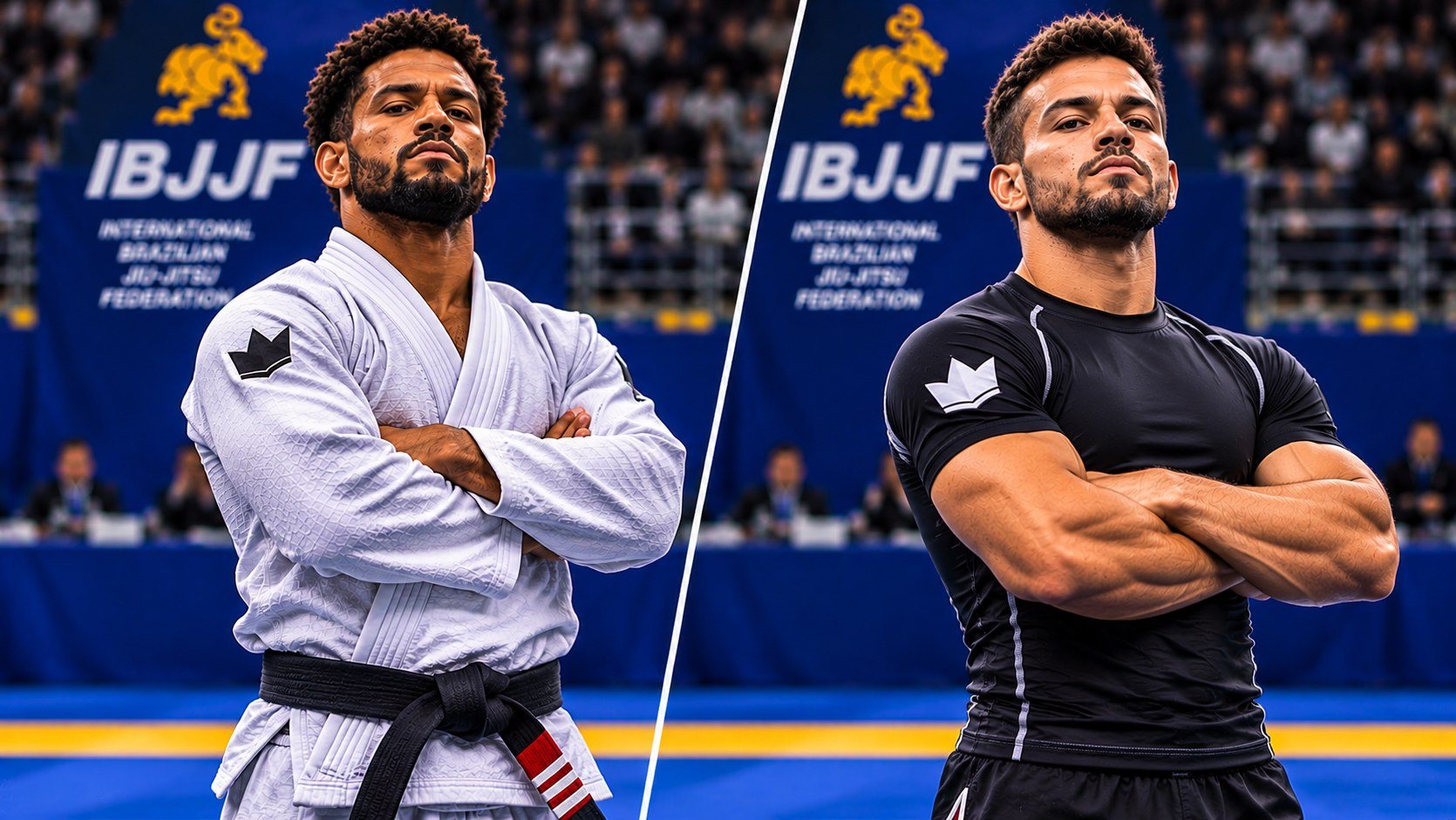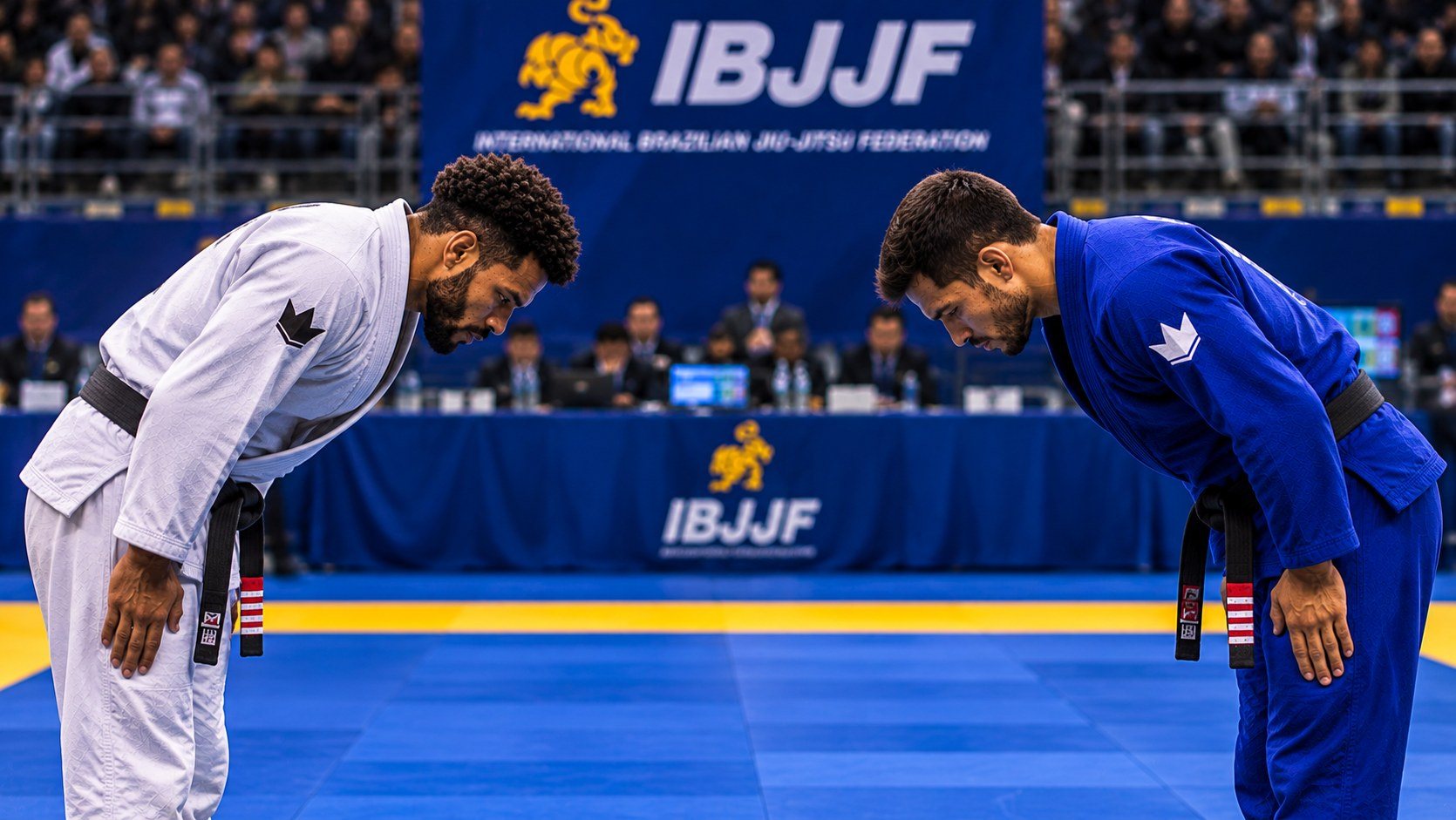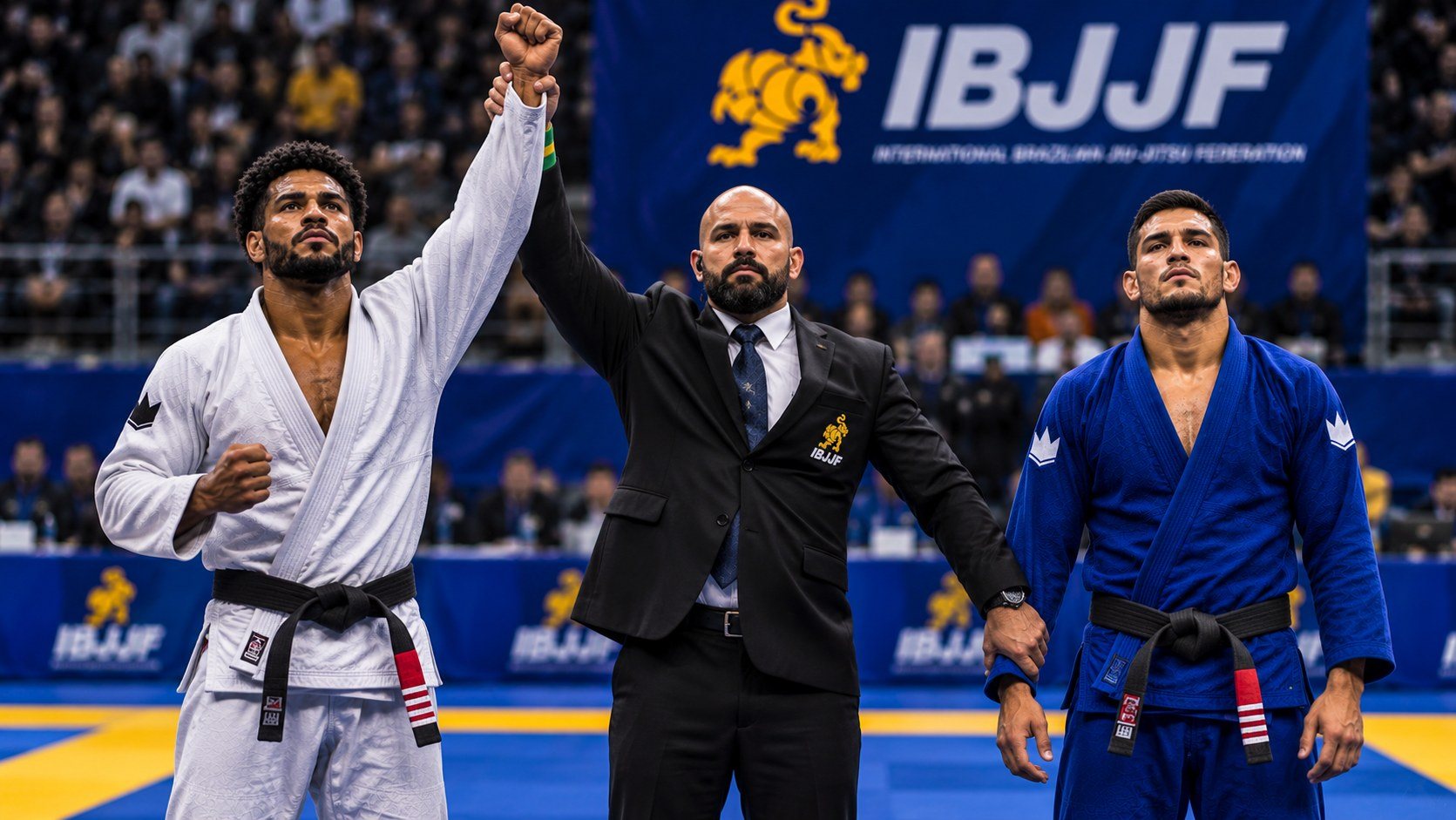
THE COLLECTIVE IS THE STANDARD!
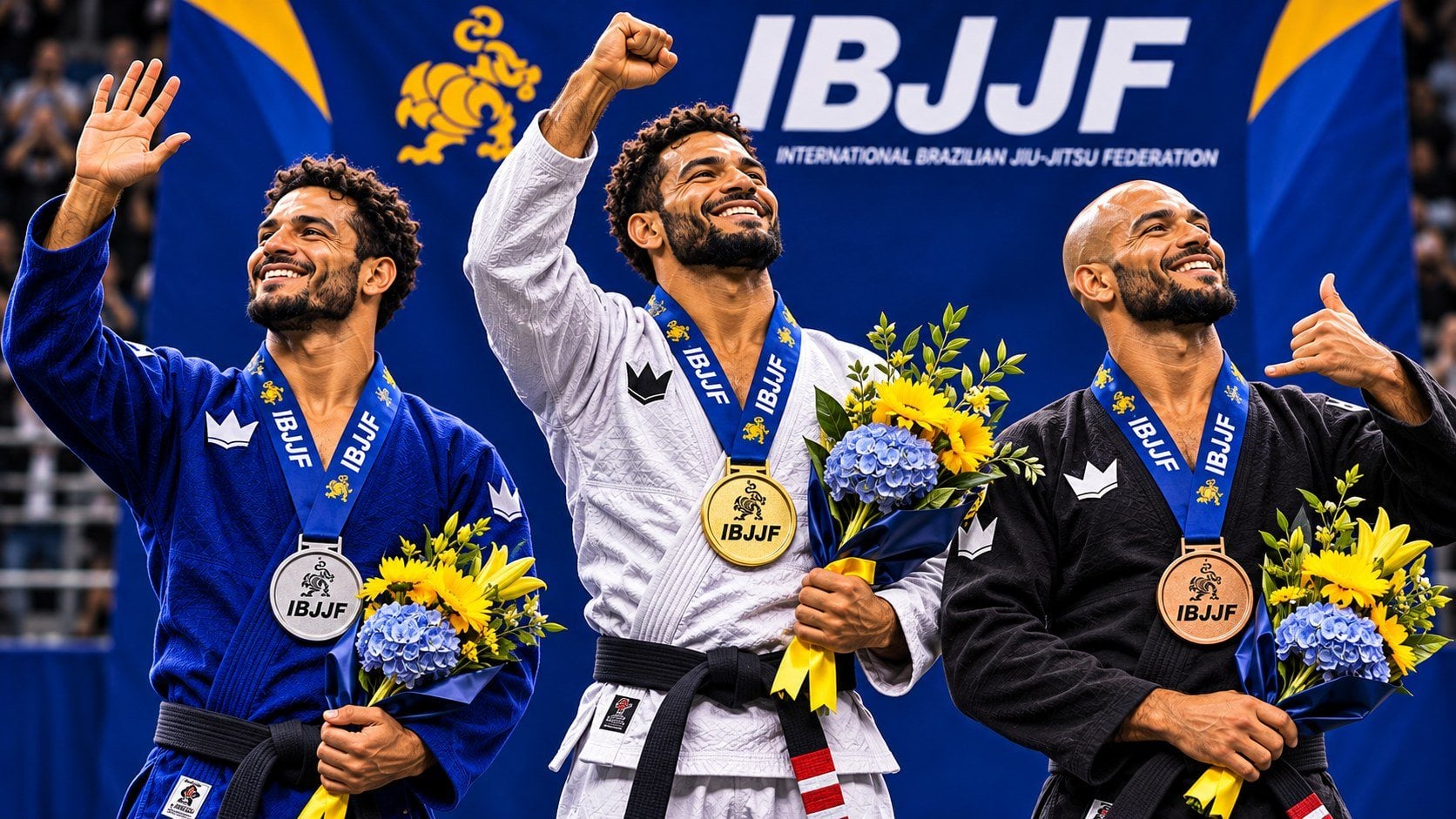
Why the Best Jiu-Jitsu Team Is Defined by the Success of the Many, Not the Accomplishments of the Few
ONE GREAT ATHLETE CAN WIN A CHAMPIONSHIP. A GREAT TEAM PRODUCES CHAMPIONS. THERE IS A DIFFERENCE.
In Jiu-Jitsu, we have a tendency to associate the success of an entire academy with the accomplishments of its most recognizable athletes.
One competitor wins a world championship, and suddenly the entire academy is considered world-class.
One athlete dominates a prestigious tournament, and people start calling their team the best.
One exceptional grappler builds an impressive résumé, and their individual accomplishments become the measuring stick for everyone who trains alongside them.
But here's the question we should be asking:
Does having one exceptional athlete make an entire team exceptional?
My answer is no.
It makes that individual exceptional.
There's an enormous difference between having the best athlete and having the best team. Those two things are not interchangeable, and we need to stop treating them as though they are.
And if you look at the history of other sports, you'll find countless examples demonstrating exactly what I'm talking about.
Hockey, basketball, soccer, wrestling, and many other sports have repeatedly shown us that accumulating the biggest names doesn't necessarily produce the strongest team.
Sometimes, the most effective team isn't the one with the most individually talented athletes.
It's the team with the right athletes, working together, solving problems together, and performing as a single cohesive unit.
The true measure of a team's effectiveness, technical ability, coaching quality, and competitive success isn't found in the résumé of any single individual.
It's found in the collective.
The accomplishments of the entire team. The consistency of its competitors. The depth of its talent. The development of its athletes. The ability to reproduce success across different individuals, divisions, experience levels, and competitions.
If we're going to discuss who has the best Jiu-Jitsu team, then we need to evaluate the actual TEAM.
Not just its most successful representative.
1. AN EXCEPTIONAL INDIVIDUAL IS NOT PROOF OF AN EXCEPTIONAL SYSTEM
Let's establish something immediately.
Individual accomplishments deserve recognition.
Winning an IBJJF World Championship, an ADCC championship, a major professional grappling event, or consistently defeating elite opposition is an incredible achievement.
Those accomplishments should never be minimized.
But we need to understand what those achievements actually demonstrate.
They demonstrate that an individual athlete was capable of achieving a particular result against a particular level of opposition under particular competitive conditions.
What they don't automatically demonstrate is that the academy responsible for training that athlete is equally effective at developing everyone else.
Think about it.
An exceptional athlete might possess extraordinary physical attributes, unusual coordination, exceptional perception and decision-making, tremendous competitive experience, or an extraordinary work ethic.
That athlete might also have spent years developing their skills elsewhere before joining their current academy.
They may train with multiple teams, participate in specialized camps, receive private coaching, or have access to resources that most of their teammates don't.
Their accomplishments are real.
But how much of that success can reasonably be attributed to their current academy's training environment?
And more importantly, can that environment consistently develop similar capabilities in other athletes?
Because a training environment that benefits one extraordinary individual is not necessarily a training environment that successfully develops an entire population of athletes.
An outlier can succeed despite limitations in a system.
The existence of that outlier doesn't automatically validate the system.
The real test of a coaching environment is whether its effectiveness can be reproduced across many different athletes.
2. THE VEGAS GOLDEN KNIGHTS: THE RIGHT PLAYERS CAN BE MORE IMPORTANT THAN THE BIGGEST NAMES
One of my favorite examples of collective performance comes from the National Hockey League.
The 2017–2018 Vegas Golden Knights.
If you follow hockey, you know exactly what I'm talking about.
If you don't, let me explain why this story matters.
The Vegas Golden Knights entered the NHL as an expansion franchise for the 2017–2018 season.
They were a brand-new organization.
They didn't have decades of established team chemistry.
They didn't have years of organizational history.
They didn't have an established core of players who had spent their entire careers developing together.
And they certainly didn't enter the league with a roster universally regarded as the most talented in hockey.
Their team was assembled primarily through the NHL Expansion Draft and related transactions.
Many of their players had previously been considered expendable by other organizations.
They came from different teams, different systems, different coaching environments, and different competitive experiences.
Sure, they had talented players.
Marc-André Fleury was an accomplished goaltender who already had three Stanley Cup championships.
James Neal was an established goal scorer.
Jonathan Marchessault, William Karlsson, Reilly Smith, and others brought valuable skills.
But nobody was looking at that roster before the season and saying:
"That's the most talented team in the NHL."
Far from it.
Yet something remarkable happened.
THEY STARTED WINNING.
And they kept winning.
The Golden Knights finished their inaugural regular season with:
- 51 wins
- 109 points
- First place in the Pacific Division
- A trip to the 2018 Stanley Cup Final
Read that again.
A first-year expansion franchise made it all the way to the Stanley Cup Final.
They eliminated the Los Angeles Kings, San Jose Sharks, and Winnipeg Jets before eventually losing to the Washington Capitals in five games.
And while they didn't win the Stanley Cup that season, their accomplishment remains one of the most remarkable inaugural seasons in modern professional sports.
So what made them so effective?
It wasn't simply having the most famous players.
It was how their players functioned together.
They developed an identity.
They understood their responsibilities.
They bought into their system.
They played with purpose.
They supported one another.
They found ways to maximize their collective strengths.
Players who had never previously been considered elite offensive threats suddenly became major contributors.
Take William Karlsson.
Before arriving in Vegas, he had scored just 18 goals across 183 NHL games.
In his first season with the Golden Knights?
43 GOALS.
Was Karlsson suddenly a completely different human being?
No.
He was operating within a new environment, with different teammates, different opportunities, different responsibilities, and a system that allowed his capabilities to emerge.
And he wasn't the only one.
The entire roster performed beyond what many observers expected.
Their collective performance was greater than the sum of their preseason reputations.
That's the lesson.
THE GOLDEN KNIGHTS DIDN'T NEED THE BEST PLAYER AT EVERY POSITION.
They needed players whose capabilities complemented one another.
They needed players who could perform their roles effectively.
They needed a coaching environment capable of organizing those capabilities into a cohesive system.
They needed teammates who understood that their individual responsibilities contributed to something larger than themselves.
And they needed an entire roster committed to the same objectives.
Now imagine applying that thinking to a Jiu-Jitsu academy.
Do you need the most famous black belt in the world to have an outstanding team?
No.
Do you need every competitor to be a genetic outlier?
No.
Do you need every athlete to possess the same technical abilities, physical attributes, or competitive style?
Absolutely not.
You need an environment where different athletes can develop their own capabilities while collectively raising the standard of everyone around them.
The Golden Knights demonstrated that a group of athletes working effectively together could outperform teams that appeared stronger on paper.
And that's something every Jiu-Jitsu coach should think about.
Historical reference: NHL — How the Golden Knights Reached the 2018 Stanley Cup Final.
3. THE 2004 DETROIT PISTONS: SUPERSTARS DON'T AUTOMATICALLY BEAT GREAT TEAMS
Another outstanding example comes from the NBA.
The 2004 Detroit Pistons.
Let's talk about what they accomplished.
In the 2004 NBA Finals, the Pistons faced the Los Angeles Lakers.
And these weren't just any Lakers.
They had Shaquille O'Neal.
Kobe Bryant.
Karl Malone.
Gary Payton.
Four future Hall of Famers.
On paper, the Lakers had an extraordinary amount of individual talent, although Malone and Payton were well beyond their prime years.
Detroit had an entirely different identity.
Chauncey Billups.
Richard Hamilton.
Tayshaun Prince.
Rasheed Wallace.
Ben Wallace.
Outstanding basketball players, absolutely.
But Detroit wasn't built around a single superstar dominating every possession.
Their success was built around defense, discipline, complementary roles, and collective execution.
They defended together.
They rotated together.
They communicated.
They shared responsibility.
They operated as a cohesive unit.
And what happened?
DETROIT DEFEATED LOS ANGELES 4–1 TO WIN THE NBA CHAMPIONSHIP.
Five games.
That's all it took.
A team without the same collection of headline superstars defeated one of the most recognizable star-studded rosters in basketball.
Why?
Because basketball isn't decided by adding up the individual reputations of five players.
It's decided by how effectively those players perform together against opposition.
A collection of exceptional individuals doesn't automatically become an exceptional team.
You still need compatible roles.
You still need coordination.
You still need effective decision-making.
You still need players willing to do things that don't necessarily generate personal recognition.
And that applies directly to Jiu-Jitsu.
What does this mean for a grappling academy?
Imagine a room with one internationally recognized competitor who dominates everyone.
Now imagine another room with numerous athletes who are highly capable in different areas.
Excellent wrestlers.
Exceptional guard players.
Strong pressure passers.
Dangerous submission specialists.
Capable defensive grapplers.
Athletes who understand positional control.
Athletes who can adapt against unfamiliar opposition.
The first academy might possess the most accomplished individual.
But the second could provide a broader and more challenging developmental environment.
And if those athletes are successfully competing across divisions, that collective success becomes evidence of the team's overall strength.
The best individual doesn't automatically make the best team, just as the most famous basketball player doesn't automatically produce an NBA championship.
Historical reference: NBA — Pistons Shock the NBA World in 2004.
4. LEICESTER CITY: A CHAMPIONSHIP BUILT ON COLLECTIVE EFFECTIVENESS
Here's another example that reinforces the same point.
The 2015–2016 Leicester City Football Club.
Before that season, Leicester City were given odds of approximately 5,000–1 to win the English Premier League.
Five thousand to one.
They were not considered one of England's elite teams.
They weren't Manchester City.
They weren't Manchester United.
They weren't Chelsea.
They weren't Arsenal.
They didn't enter the season with the financial resources or international star power associated with the biggest clubs.
Yet under manager Claudio Ranieri, they accomplished something extraordinary.
THEY WON THE PREMIER LEAGUE.
And they did it by playing a style of soccer that maximized their collective capabilities.
They were organized defensively.
They attacked effectively in transition.
They understood their tactical responsibilities.
They didn't attempt to imitate teams with completely different resources and player profiles.
Instead, they developed an approach that worked for their actual roster.
Players like Jamie Vardy, Riyad Mahrez, and N'Golo Kanté became enormous contributors.
Those players were exceptional during that season, but Leicester's success wasn't explained by any one of them alone.
It was the coordination of the entire team.
The defensive organization.
The collective work.
The tactical decisions.
The ability to capitalize on opportunities.
And the consistency to reproduce those performances over an entire Premier League season.
Think about the Jiu-Jitsu connection.
Imagine two competition teams.
One academy has athletes who are individually talented but whose training environment lacks a clear developmental direction.
Another academy has athletes with different strengths and weaknesses, but its coaching environment consistently helps them build adaptable, effective games suited to their capabilities.
Which environment has the greater potential to produce success across its roster?
The one that can convert its athletes' individual capabilities into effective performance.
You don't build the strongest team by making everyone identical. You build it by developing individuals who can succeed within a productive collective environment.
That's an important distinction.
Historical reference: Premier League — How Leicester's Championship Was Built.
5. WHAT THESE THREE TEAMS TEACH US ABOUT JIU-JITSU
Let's look at what the Golden Knights, Pistons, and Leicester City have in common.
They competed in entirely different sports.
They operated under different rules.
They faced different competitive challenges.
Their rosters were constructed differently.
But they demonstrated an important principle.
A TEAM'S PERFORMANCE CANNOT BE ACCURATELY PREDICTED BY THE INDIVIDUAL REPUTATIONS OF ITS MEMBERS ALONE.
Talent matters.
Skill matters.
Individual excellence matters.
But so do relationships.
So does coordination.
So does coaching.
So does the ability to solve problems collectively.
So does the development of an environment where individual capabilities complement one another.
Now, there's an important distinction when we bring this back to Jiu-Jitsu.
Unlike hockey, basketball, or soccer, a Jiu-Jitsu team isn't usually competing together on the mat at the same time.
Matches are individual.
But preparation isn't.
Skill development isn't.
The training environment isn't.
And team standings are the accumulated results of those individual performances.
Jiu-Jitsu is an individual competition supported by a collective developmental environment.
That's what makes the relationship between individual and team so interesting.
The athlete competes alone.
But the athlete doesn't develop alone.
Their teammates play an enormous role in the problems they encounter, the skills they develop, and the adaptations they make.
And ultimately, the results of all those competitors determine how the team performs collectively.
6. ONE CHAMPION VS. AN ENTIRE TEAM OF SUCCESSFUL COMPETITORS
Let's look at a hypothetical example.
TEAM A: THE SUPERSTAR MODEL
Imagine an academy with one internationally recognized black belt.
That athlete wins multiple prestigious tournaments, consistently defeats high-level opposition, and is widely regarded as one of the best competitors in their division.
Incredible accomplishments.
But what about the rest of the team?
Suppose the academy regularly sends 15 competitors to tournaments, yet most struggle to win matches.
Few consistently reach the podium.
The team produces limited competitive success outside its star athlete.
The superstar is exceptional.
But does that make the entire team exceptional?
Not necessarily.
TEAM B: THE COLLECTIVE MODEL
Now imagine another academy.
It doesn't have a single internationally famous competitor.
However, it consistently sends athletes across white belt, blue belt, purple belt, brown belt, and black belt divisions.
Its athletes win across multiple weight classes, ages, and experience levels.
They consistently reach the podium.
The academy produces new successful competitors year after year.
Its white belts become competitive blue belts.
Its blue belts develop into successful purple belts.
Its experienced competitors mentor developing athletes.
The results aren't concentrated in one person.
They're distributed throughout the team.
Which academy has the stronger overall competitive program?
You would need to examine participation rates, quality of opposition, and actual competitive results to answer conclusively.
But Team B has demonstrated something that Team A's superstar alone hasn't established:
The ability to produce competitive performance across a broad population.
And when the question is about the quality of a team rather than the greatness of an individual, that distinction matters enormously.
7. THE COLLECTIVE MAKES THE INDIVIDUAL BETTER
We often talk about great athletes as though they develop in isolation.
They don't.
Every grappler is shaped by the training environment they participate in.
Think about how much your development depends on your teammates.
The wrestler who constantly challenges your ability to maintain guard.
The leg locker who forces you to recognize entries and manage dangerous entanglements.
The pressure passer who exposes weaknesses in your frames and defensive positioning.
The smaller, faster athlete who forces you to improve your timing.
The larger, stronger athlete who challenges your ability to manage distance and leverage.
The technical upper belt who consistently presents problems you haven't learned to solve.
Every one of these individuals contributes something to the training environment.
And the value of that environment doesn't come exclusively from its highest-ranked or most accomplished member.
It comes from the diversity, difficulty, and quality of the problems that the collective creates.
A room filled with capable, adaptable grapplers provides a tremendous range of learning opportunities.
You aren't constantly solving the same problem against the same person.
You're being exposed to different solutions, movement patterns, strategies, and constraints.
That exposure matters.
A GREAT TEAM CREATES A POSITIVE DEVELOPMENTAL CYCLE
The better the athletes become, the more challenging the training environment can become.
The more challenging and appropriately structured that environment becomes, the more opportunities athletes have to develop.
As those athletes improve, they present new problems for their teammates.
And the cycle continues.
The individual contributes to the collective, and the collective contributes to the development of the individual.
That's one of the most valuable characteristics of a genuinely strong Jiu-Jitsu academy.
Its strength isn't concentrated in one person.
It's distributed throughout the room.
8. THE ROLE OF COACHING, ECOLOGICAL DYNAMICS, AND SKILL ACQUISITION
This is where the discussion becomes especially interesting from a coaching perspective.
A coach's effectiveness shouldn't be evaluated exclusively by whether they've produced one champion.
It should also be evaluated by their ability to improve the athletes under their guidance.
Consider two instructors.
One coaches an exceptionally talented athlete who eventually becomes a world champion.
The other works with dozens of athletes of different ages, body types, experience levels, and athletic backgrounds, consistently helping them develop better decision-making, stronger defensive skills, more effective offense, and improved competitive performance.
Which coach is more effective?
We need more information before making that determination.
But the point is that a single championship doesn't automatically answer the question.
THE CONNECTION TO ECOLOGICAL DYNAMICS
From the perspective of ecological dynamics and the Constraints-Led Approach (CLA), this becomes especially important.
Skill acquisition isn't simply about memorizing techniques and reproducing predetermined movements.
It's about developing functional relationships between the athlete, the opponent, and the environment.
Athletes must learn to perceive relevant information and organize effective actions in response.
They need to recognize opportunities as they emerge.
They need to adapt to changing constraints.
They need to solve movement problems against genuine resistance.
A productive training environment should provide opportunities for these skills to develop across its athlete population, not exclusively within a select group of exceptional performers.
That doesn't mean every athlete will progress at the same rate or achieve the same results.
Individual differences matter.
However, the environment should create conditions that support learning across a wide range of abilities.
And this is where the Golden Knights example becomes relevant again.
They didn't succeed by turning every player into an identical version of the same athlete.
They succeeded by organizing different capabilities into an effective collective performance.
Similarly, I don't need every student in my academy to grapple exactly like me.
I don't need everyone playing the same guard.
I don't need everyone using the same passing system.
I don't need every competitor adopting the same submission preferences.
What I want is an environment where each individual can develop functional solutions to the problems presented by Jiu-Jitsu.
And I want those individuals to challenge one another in ways that continue driving development throughout the team.
The objective isn't to manufacture one athlete who can execute everything perfectly. It's to develop a room full of athletes who can solve the problems that Jiu-Jitsu presents.
9. DEPTH IS ONE OF THE DEFINING CHARACTERISTICS OF A GREAT TEAM
One of the biggest differences between an academy with talented individuals and an academy with a genuinely strong program is depth.
Depth means the team's competitiveness doesn't disappear when its best athlete isn't competing.
Think about what happens when a successful competitor gets injured, retires, changes teams, or decides to stop competing.
Does the academy's competitive success disappear with them?
Or are there other athletes prepared to step forward?
Does the team have multiple competitors capable of winning?
Are those competitors spread across different divisions and experience levels?
Are newer athletes improving and becoming increasingly competitive?
A genuinely strong team shouldn't be dependent on one individual to maintain its identity.
It should have an environment capable of developing and supporting multiple successful athletes.
The Golden Knights had to rely on more than one player throughout their season.
The Pistons needed contributions from their entire starting five and supporting roster.
Leicester City needed players fulfilling different responsibilities over an entire league campaign.
And a Jiu-Jitsu competition team needs multiple athletes capable of delivering results.
One outstanding competitor might win a gold medal.
But if you're trying to win the overall team championship, you need your other athletes to contribute.
Your white belts matter.
Your blue belts matter.
Your purple belts matter.
Your brown belts matter.
Your black belts matter.
Your juvenile competitors matter.
Your adult competitors matter.
Your masters competitors matter.
EVERYONE WHO STEPS ONTO THE MAT REPRESENTING THE TEAM CONTRIBUTES TO ITS COLLECTIVE PERFORMANCE.
Not everyone contributes equally to the competitive score.
Not everyone wins.
Not everyone medals.
But the development of the entire roster matters to the long-term strength of the program.
And that's exactly why depth is so important.
10. TEAM CHAMPIONSHIPS MATTER, BUT THE NUMBERS NEED CONTEXT
In competitive Jiu-Jitsu, organizations often award team points based on individual placements and results.
Those points contribute to overall academy or team standings.
While different organizations use different scoring systems, the underlying principle is important.
Individual accomplishments contribute to a collective result.
That's exactly what team competition should recognize.
However, we also need to be careful about treating every team championship or ranking as an equally reliable measure of quality.
Imagine an academy that brings 100 competitors to a tournament.
Another academy brings 10.
If the larger team accumulates more total points, does that automatically mean its athletes are more skilled?
No.
Participation volume affects team scoring.
Similarly, imagine one academy wins a local tournament with relatively shallow divisions, while another places highly against a much deeper field of nationally ranked competitors.
Those results aren't necessarily equivalent.
This is why evaluating a team's competitive performance requires more than counting medals or reading the team standings.
WHAT SHOULD WE ACTUALLY EXAMINE?
1. Total competitive success
How many matches, medals, tournament championships, and team titles has the academy earned?
2. Competitive consistency
Does the academy perform well repeatedly, or are its results concentrated around one exceptional event?
3. Depth across athletes
How many different athletes contribute to the results? Are the same one or two people responsible for almost everything?
4. Quality of opposition
Are athletes succeeding against strong, experienced competitors? How deep and competitive are their divisions?
5. Performance relative to participation
How successful is the team relative to the number of athletes competing? Total points matter, but so do win rates, podium rates, and the quality of the fields.
6. Development over time
Are newer athletes improving? Are athletes becoming more competitive as they progress through their ranks and experience levels?
7. Results across different environments
Can the athletes perform under different rulesets, against unfamiliar opponents, and at increasingly challenging events?
8. Sustainability
Does competitive success continue when established athletes retire, leave, or stop competing?
No single statistic can tell the entire story.
But taken together, they provide a much more useful picture of a team's capabilities.
The goal should be to evaluate the collective fairly, not simply find whichever statistic makes our favorite academy look best.
11. THE BEST TEAM ISN'T NECESSARILY THE BIGGEST TEAM
I want to address something important here because arguments about team results can easily become misleading.
The biggest academy isn't automatically the best academy.
The academy with the most competitors isn't automatically the most skilled.
The academy with the most Instagram followers isn't automatically producing the strongest athletes.
And the academy with the most total medals isn't automatically more effective than every smaller program.
Scale matters.
Resources matter.
Participation matters.
If an organization has hundreds of active competitors, it's likely to have more opportunities to accumulate wins and medals than an organization with only a handful.
That's why we need to examine both the quantity and quality of the collective results.
Imagine a small academy that sends eight athletes to a major competition and six win medals against very strong opposition.
Now imagine another academy that sends 80 athletes and wins eight medals against comparable opposition.
The larger academy earned more medals.
But the smaller academy demonstrated a significantly higher podium rate among those competitors.
Which result is more impressive?
That depends on what we're evaluating.
The larger team has greater total medal production.
The smaller team has a stronger podium rate in this example.
Neither number independently settles which academy is best.
We'd also want to examine actual match results, division difficulty, competitive experience, and performance over multiple events.
Collective excellence isn't simply about having more people. It's about what those people are collectively capable of doing.
And remember the Golden Knights.
They weren't the organization with the longest history.
They weren't the franchise with decades of established infrastructure.
They were a brand-new team.
But they demonstrated how much a properly organized group of athletes could accomplish.
The lesson isn't that resources or individual talent don't matter.
It's that effective collective performance can be more important than the individual reputations of the people involved.
12. SUSTAINED SUCCESS IS MORE IMPRESSIVE THAN OCCASIONAL SUCCESS
Almost anyone can have a good tournament.
An athlete can have the perfect day.
An academy can bring a particularly strong roster to one event.
An unusually favorable bracket can influence outcomes.
A team might have an excellent weekend because several matchups happen to favor its competitors.
That's part of competition.
But sustained success tells us more.
What happens over six months?
One year?
Three years?
Five years?
Does the academy continue producing successful competitors?
Does it remain competitive as athletes advance through the belt ranks?
Are new athletes stepping forward as established competitors move on?
Can the team adapt as the sport evolves?
This last question is particularly relevant in modern Jiu-Jitsu.
The competitive landscape is constantly changing.
Passing strategies evolve.
Guard systems change.
Leg entanglement strategies evolve.
Wrestling integration continues to influence Nogi grappling.
Rule-specific tactical approaches change how competitors organize their games.
An academy that wants to remain competitive has to continue adapting.
A successful team isn't simply preserving what worked ten years ago.
It's continuously developing athletes capable of solving the problems being presented today.
That's why sustained collective performance is more meaningful than temporary dominance by one exceptional competitor.
A single championship is an achievement.
A consistent pattern of competitive success across many athletes and multiple seasons is evidence of something broader.
13. A GREAT TEAM IS MORE THAN ITS COMPETITION MEDALS
I don't want this argument to suggest that tournament results are the only meaningful measure of a Jiu-Jitsu academy.
They're not.
An academy can be highly effective at teaching self-defense, developing recreational practitioners, improving technical and tactical ability, or helping students build sustainable training habits without producing large numbers of competitive champions.
Not everyone wants to compete.
And not everyone should be judged by competitive accomplishments.
An adult who begins Jiu-Jitsu with no athletic experience and eventually becomes a capable, confident grappler represents a meaningful coaching success.
A 50-year-old practitioner who develops the ability to train safely and effectively with younger, more athletic partners represents another form of success.
A beginner who develops functional defensive skills, learns to manage pressure, recognizes opportunities, and becomes more adaptable is demonstrating genuine learning.
Those outcomes matter.
And they deserve recognition.
So we should distinguish between two related but different questions.
What makes an academy an effective training environment?
And:
What makes an academy the strongest competitive team?
The first question involves the development of the entire student population, including recreational practitioners.
The second focuses more directly on competitive performance against relevant opposition.
Both should consider the collective.
But they shouldn't necessarily use identical measures of success.
A great competition team should produce strong competitive results.
A great teaching academy should produce meaningful learning and development across its students.
An outstanding academy may accomplish both.
14. SO WHAT ACTUALLY DETERMINES WHO HAS THE BEST JIU-JITSU TEAM?
Here's where I stand.
If we're going to call an academy the best competitive Jiu-Jitsu team, that claim should be supported by the accomplishments of its collective roster.
Not its most famous athlete.
Not one world champion.
Not one professional grappler.
Not one impressive tournament performance.
And not just how loudly the academy promotes itself.
We should look at the total body of work.
The strongest team should make a compelling case through a combination of:
High-level competitive results against meaningful opposition.
Multiple athletes contributing to those results.
Competitive success across relevant divisions and experience levels.
Consistency over multiple tournaments and seasons.
Strong performance relative to roster size and participation.
Continued development of new generations of competitors.
The ability to perform against unfamiliar opponents and adapt to evolving competitive demands.
Ideally, comparisons would be made within a defined competitive context.
Who has the best Nogi team?
Who has the strongest Gi competition program?
Who has the most successful youth program?
Who is producing the strongest adult competitors?
Who is performing best in a particular organization, region, or ruleset?
These are questions we can investigate with evidence.
But saying an academy is simply "the best in Jiu-Jitsu" without specifying what is being measured is much harder to defend.
Different competitions reward different skills and strategies.
Different organizations have different participation levels.
And competitive success can look very different depending on which population we're examining.
If we're going to make claims about who is the best, we should be willing to define the standard and examine the results.
That's not disrespectful.
That's accountability.
15. THE TRUE SIGN OF A STRONG TEAM IS THAT EVERYONE CONTRIBUTES TO ITS STANDARD
Here's something I believe gets overlooked.
When a team becomes genuinely strong, its standard isn't established exclusively by the coach or its most successful competitor.
It's reinforced throughout the entire training environment.
The experienced competitors challenge the developing competitors.
The developing competitors introduce different problems and demand adaptation.
Athletes share experiences, exchange information, challenge assumptions, and expose weaknesses in one another's games.
Nobody has all the answers.
Nobody is responsible for all the success.
And nobody develops independently of everyone else.
The collective becomes an important part of the learning process.
Think about what that means.
When you train in a room with 30 capable grapplers, you aren't simply benefiting from one coach's knowledge or one athlete's ability.
You're participating in an environment where 30 different individuals bring different experiences, perceptions, movement solutions, and competitive problems.
And every time those individuals improve, the potential quality of that environment improves with them.
That's what makes team development so powerful.
The objective shouldn't simply be to produce one extraordinary athlete while everyone else remains ordinary.
The objective should be to raise the collective standard so that excellence becomes increasingly common throughout the room.
And here's where I want to make a distinction that I believe every academy owner and head coach should understand.
YOUR TEAM'S STANDARD ISN'T DEFINED BY YOUR BEST STUDENT. IT'S REVEALED BY THE CAPABILITIES OF YOUR STUDENTS AS A WHOLE.
If only your top competitor is exceptional, you have an exceptional competitor.
If you have an entire room of athletes who are difficult to submit, difficult to sweep, difficult to pass, technically adaptable, and consistently successful against unfamiliar opposition, you're developing something much more significant.
A strong team.
That's the objective.
Not everyone will become a world champion.
Not everyone will develop the same skills or reach the same competitive level.
But everyone should have opportunities to improve and contribute to the development of the people around them.
That's how a team becomes something greater than a collection of individuals wearing the same patch.
It becomes an actual developmental system.
FINAL THOUGHTS: THE NAME ON THE PATCH HAS TO MEAN MORE THAN ONE PERSON
Think about what the Vegas Golden Knights accomplished in their very first NHL season.
A group of players assembled from different organizations, many of whom were not considered elite superstars, came together and reached the Stanley Cup Final.
Think about the 2004 Detroit Pistons.
A team built around defense, coordination, and complementary roles defeated a Lakers roster containing four future Hall of Famers.
Think about Leicester City.
A club given 5,000–1 odds to win the Premier League went on to become champions by maximizing the collective capabilities of its players.
Different sports.
Different circumstances.
Different athletes.
But an important lesson shared by all three.
THE BEST COLLECTION OF INDIVIDUALS ISN'T NECESSARILY THE BEST TEAM.
A Jiu-Jitsu academy's reputation should be earned through the collective accomplishments and development of the people who represent it.
I don't care how famous one athlete is.
I don't care how impressive one individual's résumé looks.
And I don't care how many people point to that individual as proof of an entire academy's superiority.
When we're evaluating the athlete, let's evaluate the athlete.
When we're evaluating the team, LET'S EVALUATE THE TEAM.
Give outstanding individuals the recognition they've earned.
But don't confuse their individual greatness with proof of collective greatness.
The best teams have depth.
They have consistency.
They have athletes who continue improving.
They have a culture where people challenge and develop one another.
They produce successful competitors across different divisions and continue doing so when their most accomplished athletes are no longer competing.
Their results aren't dependent on one name.
Their success isn't concentrated in one person.
Their reputation is supported by what their athletes can collectively accomplish.
And when you examine their competitive record, you're not looking at an isolated collection of exceptional performances.
You're looking at a sustained pattern of collective achievement.
THAT'S THE DIFFERENCE BETWEEN HAVING A CHAMPION AND BUILDING A CHAMPIONSHIP TEAM.
One athlete can put an academy on the map.
But an entire team performing at a high level is what establishes the strength of the program.
And a program that continues developing capable athletes year after year demonstrates something no single individual can establish alone.
The strength of the collective.
Because at the end of the day:
THE BEST ATHLETE IS DETERMINED BY INDIVIDUAL PERFORMANCE.
THE BEST TEAM IS DETERMINED BY COLLECTIVE PERFORMANCE.
THE STRONGEST PROGRAM IS THE ONE THAT CAN CONSISTENTLY DEVELOP THE COLLECTIVE.
And perhaps most importantly:
YOU DON'T NEED THE BEST INDIVIDUALS TO BUILD THE BEST TEAM. YOU NEED THE RIGHT INDIVIDUALS, THE RIGHT ENVIRONMENT, AND A COLLECTIVE COMMITMENT TO EXCELLENCE.
That's how you build a program.
That's how you establish a standard.
That's how you create something bigger than any one individual.
And that's how you build a team whose success belongs to everyone who helped create it.
ONE TEAM! ONE STANDARD! STRONGER TOGETHER!
Jay Pages
Jay Pages Jiu-Jitsu & MMA
LET'S HAVE A CONVERSATION
Do you believe a Jiu-Jitsu academy should be judged by its most successful athlete, its total championship count, or the consistent competitive performance of its entire roster?
And when we call an academy "the best team," what evidence should we actually require?
I'd love to hear how other coaches, competitors, and academy owners evaluate team success.
Because individual greatness deserves recognition. But collective greatness is what defines a team.